The 2013 Emmys were one of the better award shows I've seen in the last several years. It was nicely paced, touching, sometimes funny, and overall entertaining.
Unlike the Fashion.
This year's Emmys were brought to you by the color RED.
Carla Gugino & Michelle Dockery
Lucila Sola & Christine Baranski
Jennifer Westfeldt & Sofia Veragara
While Sofia Vergara's dress is pretty and she's a beautiful woman, Sofia's ample cleavage looks as if it's going all "Hulk Smash!" through her dress.
Winner Not the Winner
Kaley Cuoco & Kelly Osbourne
Kaley Cuoco stuns in her structured maroon Vera Wang with a subtle pointed sweetheart neckline, sultry matching eye shadow, and lovely hair. Whole package right here folks!
Then there's Kelly. Too much pleating, terrible cut of the sleeves, and the back is bedazzled, but what mercilessly murders the dress is Kelly's horrific hair.
Don't forget "Pregnant Red"
Brooke Anderson & Gail Simmons
Did a memo go out to all the pregnant attendees?
Obviously Morena Baccarin champions Pregnant Women Everywhere for choosing a gown that's the right cut, shade, and material for her body... and not pairing it with purple shoes, *hint hint* Brooke Anderson. Congratulations Morena you win Bragging Rights!!!!
Maybe it's the stylists, maybe it's the designers, or maybe I'm sick of solid colored gowns with slight trains and spaghetti straps. I mean, come on! These actresses get to wear this stuff for free or have the money to spend on expensive dresses and they come up with prom bombs like these two:
Elisabeth Moss's dress looks cheap (and that lipstick!!) while Anna Gunn is looking a little "Mother of the Bride." I'm sure these dresses cost an arm, a leg, and a kidney, yet Sarah Silverman manages to outshine both these women in a $60 dress:
She isn't even close to "Best Dressed," but Silverman looks great and gets extra points for balancing in those atrocious heels - her feet look like horse hooves.
You're starting to see it now, aren't you?
Speaking of cheap [looking] dresses...
Amanda Anka & Brooke Burke-Charvet
Okay, so Amanda's dress would be cute on a 20 year old. The strapless hi-lo dress ages her and is just barely saved by those pointed toe heels.
Can I just say: I do not like a curved heel, I don't care how "en vogue" it is - it looks dumb.
Brooke's gown needs different styling. That messy do contrasts too much with the clean lines and structure of the gown, not to mention she's drowning in eye-makeup and silver accessories. Simmer down, Brooke!
So who did Black & White right?
Winner
A 19 year old. Way to go Morgan Saylor! But please.... find a new hair stylist!
And now...
Battle of the Broads!
Beautiful women facing off against one another in a Red Carpet Showdown.
(omg it's so intense)
Amy Poehler vs. Robin Wright - High Necks and Capped Sleeves
There's an intensity about Robin Wright in this dress: it's classic black... but from the future. Smokey eyes and the longer pixie cut pair nicely. Amy is shapely and fit with a tight, pulled back part but the detail at the hips is distracting.
Winner: Robin Wright.
Vnecks and cutouts
Host Shaun Robinson vs. Host Cat Deeley
There's something about Cat Deeley's fashion choices that's always a bit off, in this case it's the sequins and cut of the dress. Shaun looks lovely but that beehive seems like it'll topple over any minute.
Winner: Shaun Robinson
Blue
Host Giuliana Rancic vs Host Maria Menounos
Giuliana is grossly thin. I'd rather see her covered up than stare at every uneven surface of her bones. Maria is lovely and rocking quite the elegant fishtail braid and beyond gorgeous bling.
Curves
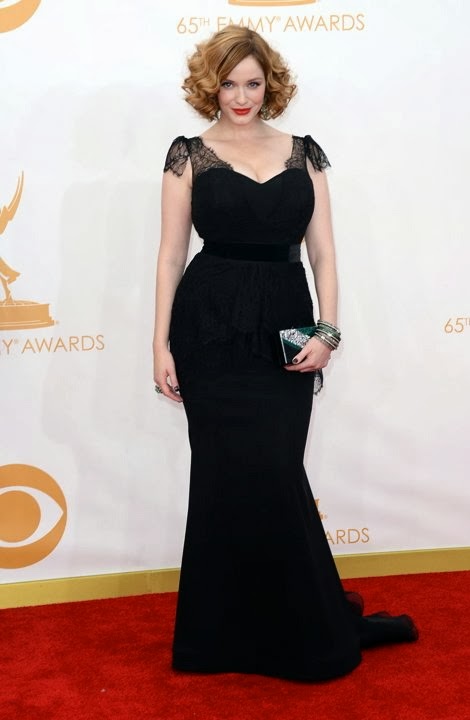
Christina Hendricks & Alfre Woodard
Alfre chose the wrong color combo and the dress hangs limp. Christina is champion of working those curves. Winner!!!
Sheer
Lena Heady and Julianne Hough
Sheer is hard to pull off no matter what, but Julianne is just a friggin' mess, as if she was interrupted from disrobing when they opened the door to the limo as she arrived at the red carpet. Lena is edgy in general so it's not surprising she'd go for a risque look.... but compared to Hough she's a church nun.
Those added details...
It's as if someone who loved hot gluing crafts got hold of Aubrey Plaza's boring dress and began adding fake flower petals for a touch of color then stopped. On the other hand, the detail on Kerry Washington's dress creates a lovely, whimsical gown.
White
Sandrine Holt looks as sad as that stringy material hanging on her body. Kate Mara has made white interesting but there's a lot going on. Neither win.
Tiny Necklines
Why women insist on necklines that make their busts appear teeny tiny I will never know. Cobie Smulders in blush still looks beautiful while Zosia Mamet looks as sad as that tie dyed mess of a dress. It's cool if you want to be different but show some damn pride in yourself!
Blue Mermaid
This is one of those times Tina Fey decided to look good for the show - and she does but it's nothing special. Rocsi Diaz is smokin' and the dress reminds me of flower petals.
Beige
Beige is boring - that is all.
Sister vs Sister
Though Sarah Hyland is the stylish on-screen sister of nerdy Ariel Winter's character in Modern Family, her over-tanned body and mannequin like, botox injected face (fake boobs too?) cheapen the lackluster green gown. Whoever is telling these young starlets to get plastic surgery and botox needs to shut their faces and rethink their priorities
Ariel in contrast looks fresh, young, and elegant in pink chiffon - hands down winner.
Off-screen sisters Zooey and Emily Deschanel each put their twist on dusty blue gowns. Emily looks classic in lace and a loose up-do while Zooey's 60's inspired hair and makeup add glamour to an interesting gown. DRAW.
Hot Messes
Gia Coppola
Besides the unkempt hair, terrible structuring of the dress, and poor color choice, the shadow on the material makes it look like she has.......... an erection.
Ladies and Gentlemen: Jessica Pare and the wrinkled material dress that appears to be eating her!
(but the shoes are fab)
Some people wrap themselves in gold foil and call it a dress. That's cool.
Then there's this....
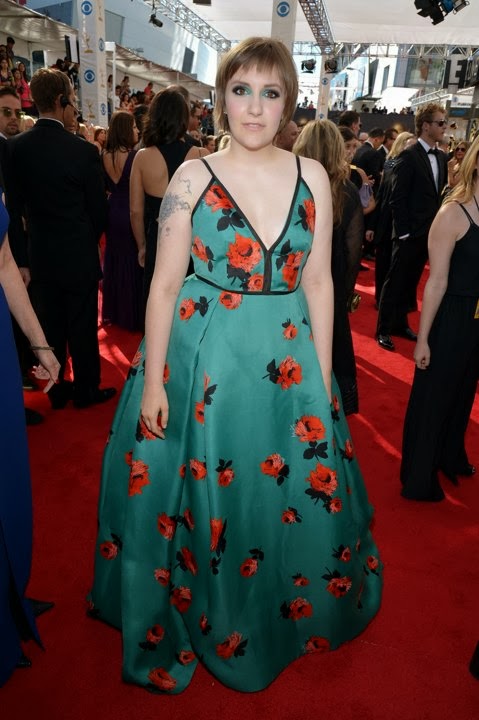
I don't..... um.... I really have no idea what to say.
Just say no to drugs, kids.
I think Lena Dunham's choices might be part of ironic comedy... I hope. This is just terrible, made worse by that makeup and horrible haircut.
Hey Claire Danes! Nice sternum!
Seriously, how can you wear no bra yet still have boob spillage? Nothing is right about this.
Elegant
On a positive note, Julia Louis-Dreyfus is as beautiful as ever. This woman does not age!
Rose Byrne - who is beyond TINY (written in all caps makes that ironic!!) - is simply amazing.
Guess who's having a bad hair day?
Betsy Brandy and Vera Farmiga!
These heads belong on different bodies:
(A little dark Game of Thrones and True Blood humor for you all) But seriously, the dresses are nice, the hair and makeup are nice.... they just don't belong together.
So Close and Yet...
Julie Bowen looks nice but the peach color washes her out and the material on the bottom is swallowing her tiny frame. Malin Ackerman is okay... but the color is wrong.
On TV I didn't mind Connie Britton in this dress because I didn't notice the crushed velvet. Ugh.... crushed velvet looks good on NO ONE.
So now it's time for Best and Worst Dressed.
Worst
Congrats Julianne Hough! You are the Worst Emmys Dresser of 2013!!! Your dress makes me sad and you like you're wearing granny-panties. Learn from this.
Best
Zooey Deschanel!
Everything about her is elegant, vivacious, and still unique to Zooey. Well done!
So that's that. I hope you've enjoyed this Fashion Post as it's taken me hours to write the damn thing! Leave comment and tell me your hits and misses on the Emmys Red Carpet... or just say hi.